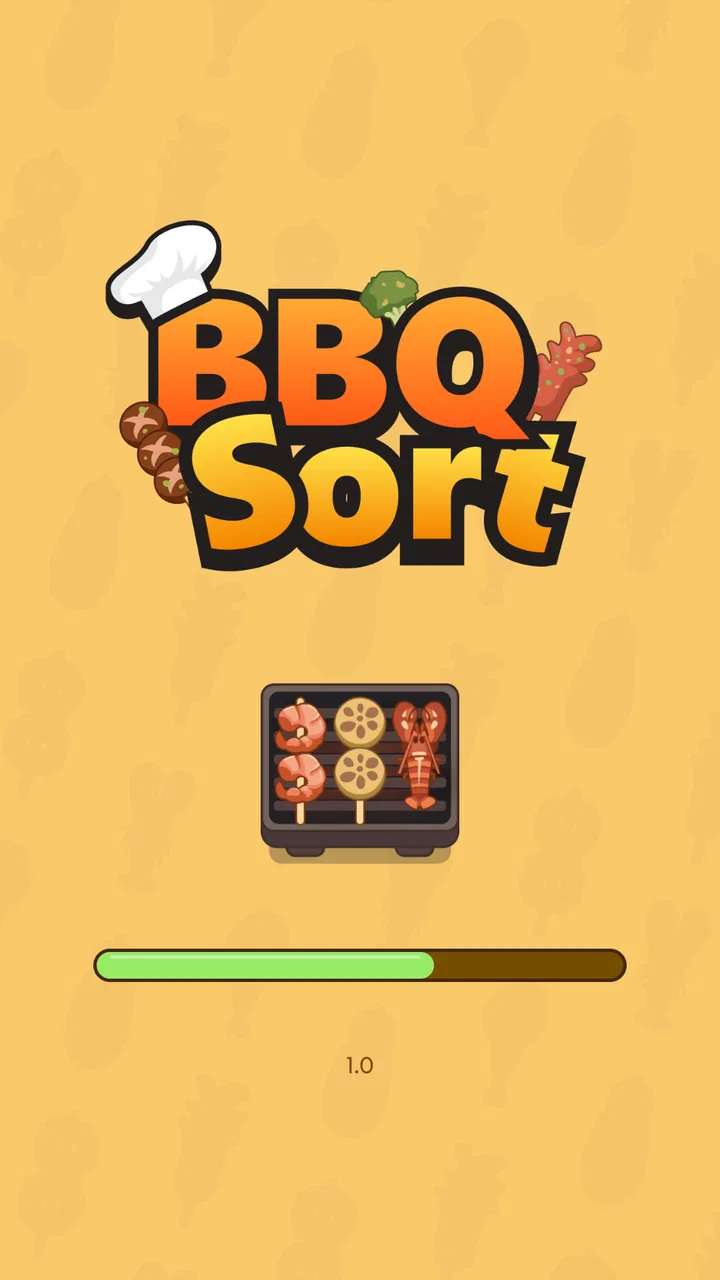
BBQSort
- 4.8
- Rating
- 1.00M
- Installs
- Free
- Price

 Analysis by App-foxy
I went into BBQSort expecting a quick, disposable puzzle and came away with a more specific impression: it is an easy-to-understand trivia-style game built around matching and sorting a grill-themed set of challenges. That simple premise is its biggest advantage during the first few sessions. I could start without studying instructions, play in short bursts, and stop without feeling as though I had abandoned a complicated campaign.
It is free to play, aimed at Everyone, and developed by WhaleSoul. The game has reached over a million installs and holds a 4.8 average from around 9,700 ratings, which suggests that its approachable format has found a sizeable audience. I would still treat those figures as a sign of broad appeal rather than proof that it will become a permanent favorite for every player. The more important question is what remains after the novelty of the barbecue theme wears off.
Why the first week feels inviting
The opening appeal comes from the combination of a familiar activity and a puzzle structure that feels immediately readable. “Grill match” tells me enough about the mood without making the game sound demanding. I do not need to commit to a long sitting, learn a fictional universe, or remember a complicated control scheme before getting started. That makes it a natural choice when I have a few spare minutes and want something lighter than a traditional trivia session.
You May Also Like

 Blood Strike: 2.5 Anniversary
Blood Strike’s Loadouts Turn Every Drop Into a Tactical Gamble
A close look at Blood Strike’s custom loadouts: how fast access to signature weapons reshapes its battle royale rhythm, rewards preparation, and narrows the gap between fights.

 Pandora - Music & Podcasts
Pandora’s Music Is Easy to Start, but Harder to Recover
Pandora’s strength is its low-effort path from a seed to a station. Its weak spot is how much confidence it asks you to place in connection, setup, and quiet recovery.

 8 Ball Pool
 Is Built on Rivalries, Rematches, and Routine
A close look at the rivalries, rematches, shared routines, and unanswered safety questions that turn a quick pool match into a persistent mobile community.

 Samsung Music
’s Quiet Strength Is Playing What You Already Own
Its reach comes less from spectacle than from dependable access to a personal library. That simplicity is both the app’s strongest retention engine and its ceiling.

 AccuWeather: Weather Radar
AccuWeather Review: A Quick, Clear Forecast for Everyday Decisions
For everyday plans, the best forecast is the one you can understand quickly. AccuWeather makes rain timing, radar, and local conditions easy to act on, with a few trade-offs.

 Hill Climb Racing
Why Hill Climb Racing Still Turns Crashes Into One More Run
A tiny car, a bumpy hill and one more upgrade: Hill Climb Racing keeps resurfacing because its simple chaos makes every near-miss feel personal.
More From Our News Desk



What I like most in the early period is the low mental entry cost. A player can approach each challenge by looking for relationships, matches, or sensible sorting choices rather than trying to master an elaborate system. That distinction matters on a phone: the game can occupy a short break without turning the break into homework. It is also friendly for people who enjoy casual brain teasers but do not usually play games with deeper progression.
The barbecue framing gives the experience a clear identity. Many puzzle apps rely on abstract tiles, anonymous symbols, or interchangeable colorful objects. Here, the grill idea provides a more memorable surface and makes the game feel less like a blank template. I would not call the theme enough reason to keep playing by itself, but it helps the first sessions feel warmer and more playful than a purely functional sorting exercise.
A realistic use case is a waiting-room visit or a short commute when I want interaction without sound, preparation, or a large time commitment. I can open a round, focus on the immediate puzzle, and put the phone away when my turn arrives. That makes BBQSort more suitable for fragmented attention than a conventional quiz app that expects a complete question set or a longer uninterrupted run.
The first-week experience also works for casual sharing. Someone who does not normally identify as a gamer can understand the basic idea quickly, and the Everyone age rating makes it a reasonable candidate for family-friendly play. I would still avoid assuming that every child will find sorting and matching equally engaging, because the appeal depends on enjoying repetition and visual problem solving rather than on a story or character-driven reward.
One useful habit is to treat the first few sessions as a calibration period. Instead of rushing through every available challenge, I would pay attention to whether the satisfaction comes from finding the correct arrangement or merely from clearing another screen. That difference predicts long-term value. If the decision-making itself is enjoyable, the game has a chance to become a dependable short-break activity. If only the initial theme is carrying the experience, fatigue may arrive quickly.
The small decisions that make it more than a theme
The best way to approach a matching-and-sorting game is not to move pieces impulsively. I found it more rewarding to scan the whole arrangement first, identify the most constrained items, and then make the move that preserves the greatest number of future options. This is a practical technique rather than a flashy feature, but it changes the tone of play: instead of tapping until something works, I am making a compact plan.
That approach also reveals an important trade-off. A fast player may clear simple situations quickly, while a careful player is more likely to avoid creating an awkward arrangement later. BBQSort therefore suits people who enjoy small chains of reasoning, not only those looking for a reflex game. The grill setting may make the presentation casual, but the most satisfying moments come from noticing order and consequence.
I would also recommend playing in consistent short sessions rather than forcing a long marathon. The format is better at providing repeated little wins than at supporting an evening-long commitment. A few minutes after lunch, during a break, or before bed gives the game room to remain pleasant. Stretching it far beyond that can make its repeated structure more visible and reduce the charm that made the first sessions appealing.
What remains useful after the novelty fades
Month-to-month value is harder to judge for a game built on a focused central idea. BBQSort does not need to compete with a large role-playing game on narrative depth, and it should not be evaluated as though it were one. Its recurring value comes from being available, understandable, and mentally light whenever I want a small puzzle rather than a major activity.
That can be enough for the right player. I often return to simple games when I want a controlled distraction: something that occupies my attention but does not demand emotional investment. The grill theme gives this one a recognizable personality, while the sorting premise keeps the interaction direct. If I enjoy the underlying decisions, the game can earn a place in a rotation alongside word puzzles, quick quizzes, and other short-session titles.
Its category placement is worth thinking about carefully. A conventional trivia game tests recall, speed, or general knowledge. BBQSort is closer to a visual reasoning exercise wrapped in trivia-style presentation. Someone looking for facts, explanations, or a steady stream of knowledge may find a standard quiz app more rewarding. Someone who prefers arranging, matching, and solving immediate problems may find this more relaxing than answering question after question.
That comparison also explains who should skip it. I would not choose BBQSort as my main game if I wanted a strong narrative, competitive rankings, extensive customization, or a sense of building a long-term character. I would also be cautious if repetitive puzzle structures usually lose my attention quickly. The game’s strength is focus, and focus naturally limits variety when compared with a broad collection of modes.
For families, the Everyone rating is reassuring as a general audience signal, but the better test is whether the child enjoys the actual style of play. Younger players may need help understanding why a seemingly good move can make later sorting harder, while older players may want more complexity than a casual format provides. I see it as a shared, low-pressure option rather than a substitute for a dedicated educational quiz tool.
One recurring-use tip is to alternate the game with a different kind of short activity. Playing it between a word game and a knowledge quiz prevents the matching pattern from becoming the entire shape of a break. This is not a criticism of BBQSort specifically; it is the most sensible way to preserve its strongest quality, which is the feeling of an uncomplicated mental reset.
Maintenance, friction, and the cost of keeping it installed
Maintenance is relatively simple in the everyday sense. I do not need to maintain a complicated profile, learn a large ruleset, or remember a lengthy storyline between visits. The current version is 1.1.4, and it runs on Android 8.1 or later, so device compatibility is practical for many older phones as well as newer ones. That broad technical reach makes it easier to keep available as a lightweight fallback game.
Still, a low-maintenance game can develop a different kind of burden: unused space and forgotten icons. Because the premise is so immediately clear, I do not need to open it regularly just to remember how it works. That is convenient, but it also means the game must continue providing fresh satisfaction rather than relying on a learning curve to bring me back. If I stop enjoying the central sorting loop, there is little friction preventing me from moving on.
The free price lowers the risk of trying it. I can test it during ordinary breaks without making a purchase decision first, which is especially helpful when I am unsure whether a barbecue-themed puzzle matches my taste. At the same time, “free” does not automatically mean that it deserves permanent storage. I would keep it only if I actually return to it, not because installing it cost nothing.
Another maintenance issue is attention rather than storage. A game like this can become a reflexive way to fill every quiet moment. I found it healthier to use it deliberately: decide whether I want a puzzle, play a small number of rounds, and close it when the break is over. That keeps the experience from turning into background tapping and makes the individual decisions feel more meaningful.
The developer, WhaleSoul, has given the game a compact identity rather than trying to make it resemble every other mobile genre at once. That is good for recognition, but it places pressure on the core loop. With a focused concept, improvements have to make the existing activity more satisfying; adding unrelated material would risk weakening the clarity that makes the game approachable in the first place.
Where fatigue can appear
The main source of fatigue is repetition. Matching and sorting are satisfying when I am discovering the logic of a situation, but less satisfying when the sequence begins to feel predictable. A theme can soften that effect, yet it cannot remove it entirely. Players who need constant novelty may enjoy the first week and then find themselves opening the game less often.
There is also a difference between “easy to start” and “deep enough to keep.” BBQSort succeeds strongly at the first goal. The long-term question is whether the decisions continue to create interesting tension. If a puzzle can be solved through the same routine every time, the player may stop feeling involved. If the arrangements require changing strategy, the game has a better chance of surviving beyond its first impression.
I would not use it when I am specifically seeking factual learning. Its trivia classification may attract people who expect questions about history, science, entertainment, or geography, but the grill-match concept points toward a different kind of mental activity. For knowledge-building, a dedicated quiz or flashcard app is the better choice. For a quick visual puzzle with a playful food theme, BBQSort is the more natural fit.
It can also be the wrong choice for competitive players. A person who needs head-to-head pressure, detailed performance tracking, or a strong social layer may find the experience too self-contained. The appeal is personal concentration, not necessarily public achievement. That makes it calmer, but it also means it may not supply the external motivation that keeps competitive games alive.
Another subtle weakness is that the theme may set expectations higher than the mechanics can support. “BBQ” suggests variety, ingredients, preparation, and perhaps a playful sense of progression. If a player expects a cooking simulation or a broad restaurant-management game, the actual matching focus may feel narrower than anticipated. I would recommend approaching it as a puzzle first and a barbecue experience second.
My practical solution to fatigue is to notice the exact moment when I begin solving automatically. That is usually the point to stop for the day, not push through. Returning later with a fresh mind preserves the small sense of discovery. This approach works particularly well for a game designed around short sessions, because its value is measured by how often it feels welcome, not by how long I can keep it open.
Who gets lasting value from it
I think BBQSort is strongest for casual players who want an approachable puzzle with a distinctive theme and no intimidating setup. It is also a good option for someone who enjoys organizing objects, spotting patterns, and making careful moves in a compact space. The game works well as a break companion, a family-friendly phone activity, or a low-pressure alternative to a demanding competitive title.
It is less convincing for players who define value through variety. If I want multiple genres, a campaign, character development, or a large knowledge database, I would choose another app and use this only occasionally. The same applies if I become bored whenever a core mechanic repeats. BBQSort is not trying to be everything, and its limits are part of the decision.
The rating and install figures show that many people have responded positively, but my recommendation remains conditional. I would tell a friend to try it because the entry barrier is low and the price makes experimentation easy. I would not promise that it will become a daily habit. Its ability to stay installed depends on whether the small act of arranging matches continues to feel satisfying after the theme becomes familiar.
For a household with several phones, the minimum operating system requirement also matters in a practical way. A device running Android 8.1 or newer can meet the stated baseline, which makes the game a plausible option for an older spare handset. That does not guarantee identical performance on every device, but it removes one common obstacle for people who do not upgrade frequently.
My long-term verdict
After looking past the first-week charm, I see BBQSort as a focused casual game rather than a deep, endlessly expanding hobby. Its best qualities are immediate clarity, a friendly grill identity, and a puzzle loop that can fit naturally into small gaps in the day. I appreciate that I can approach it without a long tutorial mindset and still find room for deliberate planning.
Its lasting value depends on moderation and personal taste. I would keep it installed if I enjoyed returning for short, purposeful sessions and if the arrangements continued to make me think rather than simply tap. I would remove it if the theme became the only reason I opened it, because nostalgia for a presentation style is not enough to sustain a game.
The real test is whether the sorting decisions remain enjoyable after the barbecue novelty has cooled. For me, that gives the game a qualified recommendation: it earns space as a dependable casual puzzle, but not as a replacement for a full trivia library, a competitive game, or a story-led adventure. Try it when you want a free, Everyone-rated distraction with a clear concept, then judge it by your return visits rather than by how entertaining the first session feels.
In short, WhaleSoul has made a game that is easy to pick up and easy to explain. That is not a small achievement, especially on mobile, where complicated interfaces can ruin a short break. Just keep expectations aligned with the actual experience: this is a themed matching-and-sorting game for repeated little moments, and it succeeds when those moments remain pleasantly engaging instead of becoming another automatic habit.
FAQs for BBQSort
01What is BBQSort and how does the game work?
BBQSort is a casual sorting puzzle game built around organizing colorful food items on barbecue skewers. The main objective is to move pieces between skewers until matching items are grouped together, usually while following limited-move or space-based rules. Its simple controls make it easy to start, but later stages require planning, patience, and careful attention to the order in which items are moved.
02Is BBQSort free to download and play?
BBQSort can generally be downloaded and played without an upfront purchase, although the exact availability of free content may depend on the Android or iOS version. Like many casual puzzle games, it may include optional advertisements, in-app purchases, or paid features. Before installing, check the store listing for current pricing, advertising information, and whether purchases are needed to progress comfortably.
03Does BBQSort require an internet connection?
The core sorting puzzles in BBQSort may be playable without a constant internet connection, which is convenient when traveling or using the game in areas with limited coverage. However, features such as advertisements, cloud synchronization, special events, leaderboards, or purchases may require internet access. Availability can vary by device and version, so test offline play after installation.
04Is BBQSort suitable for children and casual players?
BBQSort is designed as an accessible puzzle experience, with straightforward touch controls and rules that can usually be understood quickly. It may suit children, families, and adults who enjoy short, relaxing challenges. Nevertheless, parents should review the game’s age rating, advertising, and in-app purchase settings, since store ratings and monetization options can change between regions and updates.
05What should I know about BBQSort’s difficulty and advertisements?
The early BBQSort levels are typically approachable and work well as quick time-fillers, while later puzzles can become more demanding as the number of items, colors, and available spaces increases. Players who prefer uninterrupted sessions should be aware that advertisements may appear between levels or after certain actions. Optional purchases may be available to remove ads, gain hints, or support progression.
Pros
- Simple sorting gameplay that is easy to learn and play casually.
- Short rounds make it suitable for quick breaks or commutes.
- Colorful barbecue-themed visuals give the game a cheerful style.
- Increasing difficulty keeps later levels more engaging.
- Works well for players who enjoy relaxed puzzle challenges.
Cons
- Gameplay may feel repetitive after extended sessions.
- Some levels can depend heavily on trial and error.
- Progress may be slow for players seeking fast rewards.
- The barbecue theme may not appeal to every type of player.
- Limited gameplay variety can reduce long-term replay value.

BBQSort
Gallery